Tag: pet care

A Recipe for Calm

When I walk my dog I think about making a calm sandwich… it’s similar to the campsite philosophy… bring your dog home calmer than when you started.

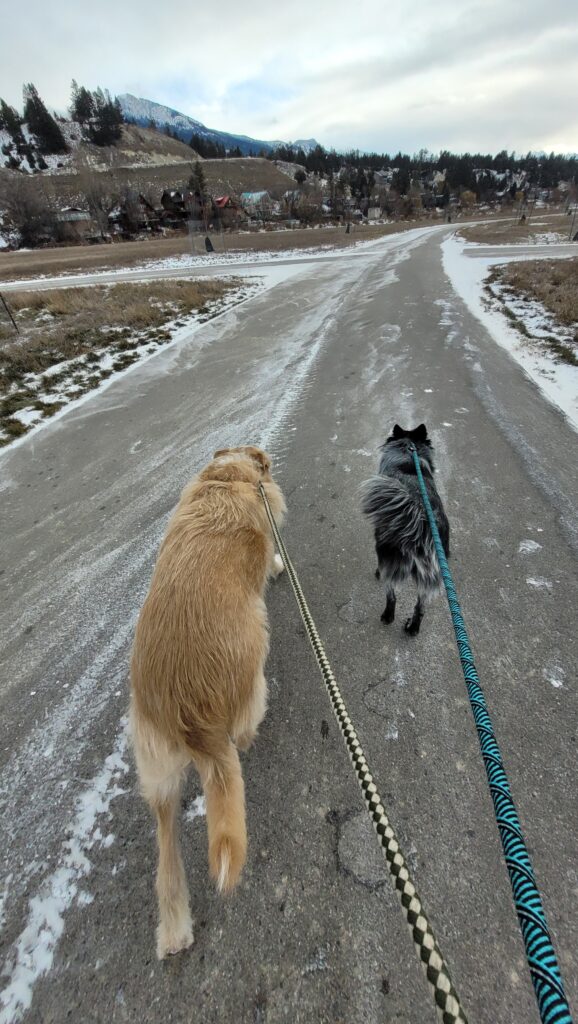
My recipe – start with 10-15 minutes slow, on leash, do some leash drills or figure 8s to make sure your dog is in a heel or follower state. If you must add some high energy activity add that after a calm leash start. Use structured play or take breaks between frisbee throws to help with impulse control. Take another 15-20 minutes of leash walking to cool down and return home in a calm state.

A physically tired dog is NOT the same as a mentally fulfilled and calm dog. If you use high energy physical exercise and your main activity to tire out your dog, you will have to do more every day to meet their endurance. Your dog will just get better, fitter, faster, stronger and it will take a longer bike ride, and more throws of a stick, and they will just keep demanding more and more. 

I learned all this the hard way, I have an amped up adrenaline junkie dog with a lean physique! But I promise you, my dog is as tired, if not MORE, after a slow leash walk around town. She has to work her brain to pay attention to me. She has to think about our walk, where we are, and who is around us. When our walks are calm and slow, she maintains that vibe in the house for hours after. All dogs need good physical exercise, but draining their brain makes them a different kind of tired, and a calm tired is a good tired.

Make sure you are choosing more activities from the Calm column below…

Activities that Create Calm:

Slow Leash Walk
Appropriate potty and sniff time
Threshold Training
Crate Time
Structured Play
Chewing a benebone
Place Training
Calm Affection
Clear directions, say it once
Parallel Walks with a friend


Activities that Build Excitement:

Off-leash Chaos
Excessive Sniffing or Marking
Jumping in the Car
Free Roaming in the House
Access to Toys
Treats, food puzzles or games
Following you around the house
Excited Greetings
Too much talk, conversation
Rowdy Playdates, Daycare, Dog Parks

Happy dog walking!
: ) Shannen

Leash Reactivity Often Starts at Home

Leash reactivity and behaviour issues don’t start on the walk, they begin in the home. If your dog is bratty or demanding, those pushy behaviours in the house will continue once you head outside for a walk. Your dog might pull you to every spot to pee or sniff, bark or lunge at other dogs, or demand play every minute. These issues should be addressed in the home before you can improve the walk.

Here’s a few changes you can make in the home to build leadership, create boundaries and add structure.

1. More crate time. Feed your dog in the crate then let them rest for an hour after each meal. Crate time after a walk or exercise will help your dog rest/decompress and reset their nervous system.

2. Wait for eye contact. Adding a few extra seconds to wait for eye contact before a for a meal, at thresholds (see #4), for a walk or playtime (see #5). Your dog will look to you as a leader.

3. No furniture privileges. Keep your dog off the bed or couches. Teach them “Place” to stay on their cot or bed instead of following you around the house. (Use a leash in the house if needed)

4. Threshold training. Have your dog sit and wait at any door in/out of the house, car or crate. This will help with impulse control so they don’t bolt excitedly out the door.

5. Structured play. Dogs need to play! Adding structure to playtime will increase leadership and engagement. Use a long line to have your dog wait before running to fetch the ball. A long line will also ensure they come back to you when called and it doesn’t turn into a game of “keep away.”

Once you’re ready to put that leash on remember our Top 10 Loose Leash Tips and go for a walk! If you are actively training your dog to stop pulling you have to be consistent. If they are pulling, STOP, do not more forward. On your first few walks you might not get very far, but keep at it, your dog will learn that a tight leash does not get them where they want to go.

Bonus tip! No rough play or wrestling with other dogs. Skip the dog park or play dates and focus on improving your loose leash heel! Keep up the great work!

Walking a dog with a loose leash

Happy dog walking!
: ) Shannen

5 Training Tips to use every day

Here is a list of our top 5 most important training tips to use every day:

1. Choose the right gear. We recommend a slip leash or a martingale collar + leash for the most effective communication. A flexi leash or long line is perfect for recall training or a relaxed sniffy walk. Save the (properly fitted) harness for sports like bikejorning or running. See our Loose Leash Training Tips!

2. Say it once! Talk less to your dog and they will listen more. Be firm and say your command once (don’t repeat commands “sit, sit, Sit, SIT! SITSITSIT!” or ask your dog “can you sit?” Then, WAIT for them to complete the request. Give them a small correction and reset if needed.

3. Small changes can have big results. Adding small amounts of structure, routine or adding a few boundaries can go a long way. Practicing waiting at the door to be released, eye contact before a meal, or permission to enjoy a couch cuddle will help with leadership in the eyes of your dog. You’re the boss!

4. Consistency is key! Staying consistent and following through with the rules is so important. If the rules keep changing your dog will struggle to understand what is expected of them. Make sure all family members are on the same page and are giving the same message.

5. SLOW, CALM, WAIT. Three important keys to success. Slow down your walk, be intentional with a nice loose leash. Practice and train calm. Calm before a walk, calm in the house, calm greetings. Be patient! Wait for them to settle around distractions and wait until they are in a calm state to receive treats or rewards (including affection). You get what you pet!

And remember, you are a confident, calm, capable dog handler!

The High-Energy Dog!

I said it for years… I have a high-energy, high-drive dog! She is Blue Heeler (Australian Cattle Dog) and Border Collie – two smart, active, working dog breeds. I don’t own sheep, so how do I keep her busy? I ran with her daily, had chuck-it sessions, used tricks and agility, 8 hours of excitement at dog daycare, played with toys in the house and kept her moving all the time. Constant over-stimulation.

Now, she will play ball till the death. There is no internal off switch. She has no quit. That was my biggest mistake I made with my dog. I did not teach her how to be ok with calm, how to slow down. I taught her to be an adrenaline-seeking athlete always needing the next fix. She has anxiety and a lean physique.

As humans we need to find our own calm, how can we expect our dogs to chill in a world currently designed to hustle. Go Go Go! Be more productive! Work more! DING! The phone notification!

Dogs need 16-18 hours of rest, Every Day.

Proper rest. Not laying on the bed as a strategic vantage point to watch who comes and goes from the park. Not following you around the house and laying beside you on the couch, only to get up again in a few minutes when you go to the next room. Not staying out on the deck all day patrolling the neighborhood on high alert.

So how do we teach our dog to stop, to rest, to be ok with the calm. How do we tell ourselves it’s ok if our dog looks “bored”. How do we teach ourselves to be ok with our own boredom?

We start by slowing down the walk, limiting the off-leash wild running freedom. We add structure to play, only allowing play outside the home, not giving in to the demands from the dog when they bring us a toy. We begin to incorporate crate time and teaching Place.

Crates provide a safe place to reset and completely switch off. It’s not dog jail. Crating your dog for 2-4 hours (or more) each day allows them time to fully decompress, especially after a walk or training session.

Training Place teaches your dog to be calm while other things are going on. They don’t have to think about where you are going, what toy to find or what the kids are playing with. Teaching them to truly relax on Place – not just laying on a mat, with ears perked up, waiting to be released to the next adventure – takes time and patience. It means correcting and directing them back to Place if they leave on their own terms.

Give your dog the appropriate amount of exercise, two leashed walks a day is usually enough for most dogs. A short 10 minute play or chuck-it session every other day. Then for the rest of the day help them train their mind to be calm, settled and relaxed.

Now, go to a yoga class and help your human mind relax!

What is Socialization?

A Better Way to Introduce Dogs

We all think our dog should have dog friends and we want them to be happy and social. But what does socialization really mean and how do we create positive introductions?

leash walks

Socialization is about exposure to new surroundings, noises and environments. We want to create positive but neutral associations to many different experiences. Exploring the world, meeting other dogs and new people and learning how to navigate every day life!

Socialization is NOT taking them to the off-leash dog park to let them “figure it out” or dropping them off at doggy daycare where “dogs can be dogs” and play all day. Many dogs find dog parks or daycare situations too overwhelming. The over-excitement, hyper-arousal and constant stimulation can create more reactivity as time goes on.

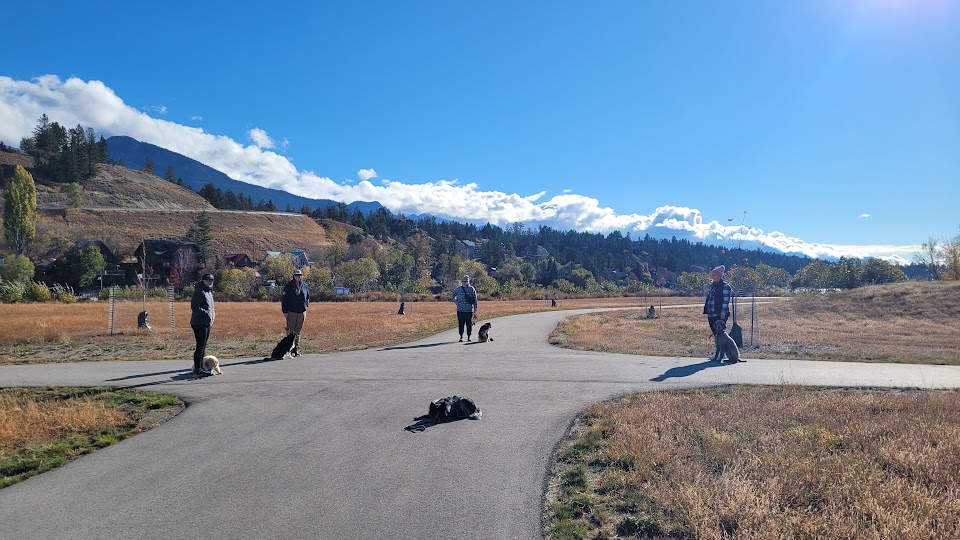
Try parallel leash walks with other dog owners – start on opposite sides of the street or farther apart then gradually begin to walk closer together. We offer pack walks in the spring and fall. Working with like-minded dog owners we can work on leash skills, practice neutral and calm behavior and share some helpful training tips.

Choose a few friendly dogs for structured, controlled meetings. Plan calm, one-on-one interactions with select dog friends instead of the chaotic, rowdy wrestling play dates. When meeting new dogs avoid giving treats, tossing toys or even excessive petting as these can trigger resource guarding responses in some dogs. As always, watch your dog’s body language and do not leave dogs unsupervised, intervene early before issues escalate into big problems. Advocate for your dog!

If you are struggling with your dog please contact us! We can connect you to a certified dog trainer and help you build confidence as a handler and improve your relationship with your dog!

We love Happy Healthy Pets! Thanks for reading!
Shannen 🙂

10 Best Puppy Training Success Tips!

Schedule – Establish structure and a routine from day 1 with meals / potty / sleep

Sleep – Allow them to sleep 20+ hours a day, use a crate for nap time

Play – Have structured, fun play every day!

Exercise – Let them explore, but skip the running or hard exercise until joints/bones and growth plates are fully formed

Calm – Teach an off-switch and train calm. Do not allow chaos or rowdy play time with other dogs

At home – It’s ok to use a leash indoors to prevent jumping, counter surfing, or poor behavior

Affection – Reward calm behavior with calm affection – you get what you pet!!

Leash – Start with short leash walks to learn leash pressure, manners and no pulling!
Hint… Read our top Loose Leash Tips to get started!

Explore – Climb on playgrounds, experience as much as possible and keep it positive and neutral

Exposure – Expose puppies to all the things in the first few months! Play loud music or TV during the day, sit and watch the world go by.

Building a solid foundation in the puppy stages will create a calm, confident and happy dog in the future!
~Shannen

We got a puppy and did everything wrong… 

Some dogs may experience some, all, or none of these issues. Some dogs may be totally ok with freedom in the house, leash pulling, strangers or anything else… but here’s our story.

We crate trained for most of the puppy time, but eventually we phased it out and she was allowed to have free-roam of the house. We were lucky and our puppy did not chew shoes or furniture so we believed this meant everything was good! Now she often follows us from room to room. This can be a sign of anxiety, being unable to settle on her own or be in a different room for too long. Teach place, or keep the crate to create a safe place to chill out.

We taught our puppy lots of obedience and tricks! She’s a high-energy working breed dog so we kept her busy with fetch, frisbee, running and hiking. A tired dog is a good dog, right? Even in the evening she would always bring us a toy and put it on the couch beside us. We would throw the toys down the stairs and she would bound and run after them! A dog doesn’t need to be constantly busy. Adult dogs still need to rest and sleep during the day. If your dog looks bored, that’s OK!

We did not correct or stop unwanted behavior. She began barking at strangers and got so excited when our friends stopped by. We thought it was just a phase and she would grow out of it. News flash – she didn’t. Five years later we are still working on it. We practice counter-conditioning and spend hours sitting in busy areas to help her learn that strangers and other dogs are not a threat. We use a leash when she meets people to try and limit the over-excitement. And we have to train our friends to ignore the dog until she is calm. Work smarter, not harder and do this in the puppy stage!

We did not teach her leash manners, instead we bought a harness and allowed her to continue to pull. Plus she was really good off-leash and her recall was reliable, sound familiar? The leash pulling increased and grew into more reactivity. She would bark at people approaching or dogs in the distance. Off-leash her recall is still great – but sometimes she also runs barking and screaming at people or dogs. This is rude, embarrassing, and potentially dangerous. Running up to the wrong dog could be met with a terrible outcome. We now use the leash more often than not, and work to create a loose leash heel with lots of engagement with us.

Having a puppy can be certainly be challenging at times. Follow our Top 10 Puppy Training Tips to build a solid foundation and you will have a stable, happy, calm dog companion for years to come!
~Shannen

Dogs that Roam Around Town

Many dogs in our small town are excellent fence jumpers or escape artists. They roam the streets in town and run along the highway. Why is this such a big deal? They are just out having a fun run and grand adventure, right? Wrong.

Risk to other pet owners

Once a dog learns that escaping is fun and adventures are rewarding it becomes even harder to contain them. But those outings come with all sorts of risks. The small risk is to other dogs or humans. No one enjoys an off-leash encounter. It can be difficult to protect and advocate for your own dog while trying to manage an off-leash dog that is coming to investigate. Is that dog friendly? Who does it belong to? How will my dog react? Off-leash encounters are unpleasant at best and can lead to a fight or worse.

Risk to wildlife

We live in a beautiful town with lots of wildlife! But wildlife and dogs are not a great mix. Once your dog is on the loose they might chase deer or sheep. This is incredibly stressful for the wildlife and your dog can be seriously hurt or injured from running too far or too long. What about animals that would be likely to defend their young, hunt or attack your dog? Do you still think your dog is having the best day ever if they are fighting off a coyote or a bear? Probably not.

Risk to the public

Dogs on the streets or running near the highway is also an accident waiting to happen. It might not happen very often, and there are some incredibly lucky dogs out there, but I have seen the worse-case scenario first hand. It’s awful. Drivers could be new to driving, elderly or distracted. Being able to react in time for a dog or animal running into the street is almost impossible. Owners or families would be devastated to lose their dog in an accident. It would be unbelievably horrible to be the driver of a car in that situation. It’s traumatic for anyone that has to witness that event. If your dog escapes the yard it puts so many people at unnecessary risk.

If you have a dog that likes to get out for their own adventure I hope you consider the potential risks and impact that this could have on wildlife or people in the community. It might be a great time to fix that hole in the yard, invest in an invisible fence or try a long-line for extra safety.

I always strive to keep your pets happy, healthy and safe.
: ) Shannen

Sizzling Summer!

We are in heat of the summer but fall and winter are right around the corner. *Please note, I will be away August 29 – September 10 with walks resuming on Sept 11. If you are planning a winter getaway and need pet sitting services reach out soon as spaces are very limited and filling up fast!

Leash skills and pack walks start up again in the middle of September. Our first class back is on Saturday September 13. Classes run 2x weekly on Saturdays 11am and Wednesdays 6pm, $20 per session, drop-in when it works for you! These classes are a great way to improve leash handling, increase leadership and teach dogs to be neutral and calm in a controlled environment. Follow us on Instagram for more details!

Weekly walks have been busy all summer. Contact me for potential walk spots in the fall and winter – there are limited spaces available! I’m still amazed at the continued support and grateful to be so busy in every season. Thank you always to my clients for trusting me with all the different and adorable, sassy, super cute pets. I love them all so much!

: ) Happy Walking!
Shannen

Dog Walking

Spring and Summer!

It’s hard to believe spring is here and summer is coming in fast! Daily dog walks are in full swing and there is limited availability for weekly spots. Get in touch soon to secure a space and get your dog on the list.

Now offering Loose Leash Basics and Pack Walk sessions on Saturday mornings and Wednesday evenings in May. These sessions are ideal for any dog, but especially those dogs (and handlers) looking to build confidence, improve the relationship and develop better leash handling skills. Contact me to learn more about these sessions and sign up!

CURRENT WALK RATES:

1 walk / week $30
2 walks / week $55
3 walks / week $80
Add $10 for 2nd dog

PET SITTING RATES:
*starting at $70/day
Add $20 for 2nd dog
add $10 for out of town.


As always I’m so grateful for the amazing clients (dogs and people) I get to work with and for the steps I get every day! Thank you for being understanding, flexible and adaptable with my requests for days off to travel and spend time with my family, it is so greatly appreciated.

: ) Shannen